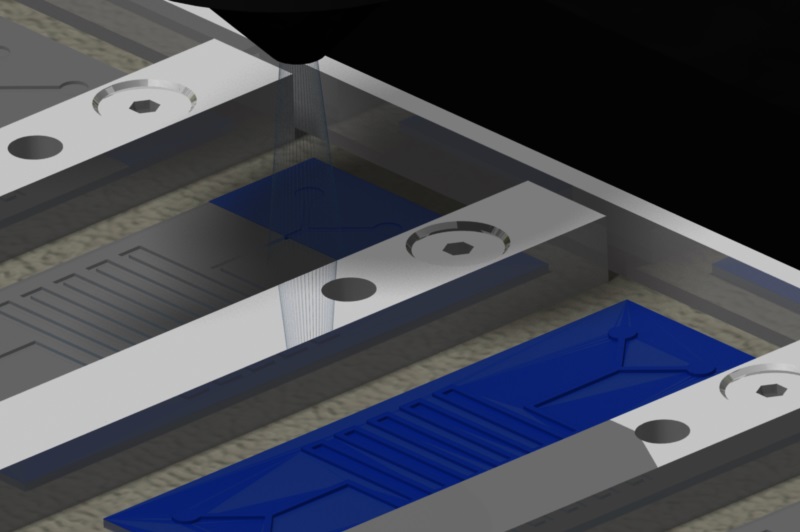
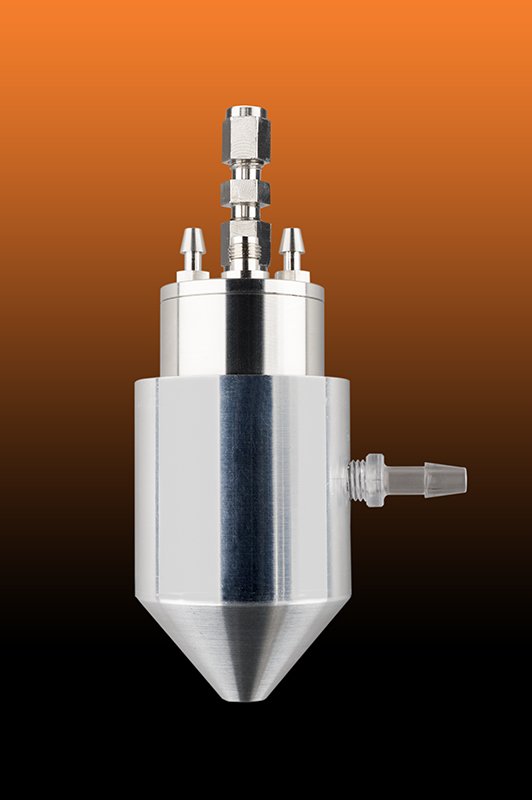
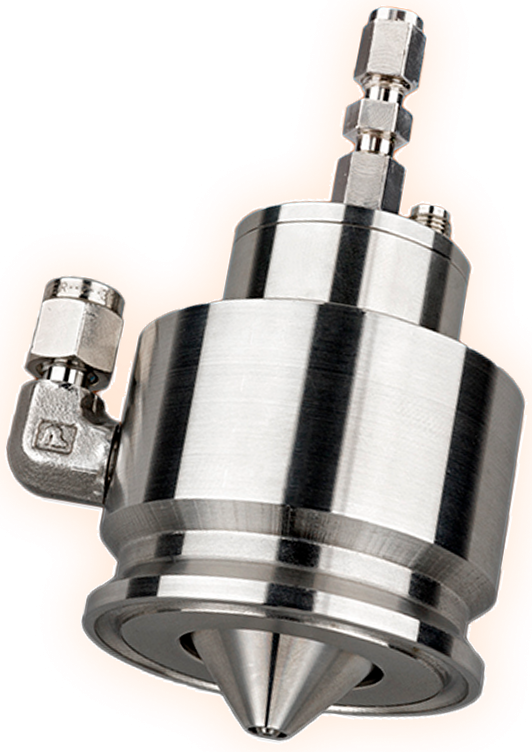
As of 2011 there were approximately 4,000 types of in-vitro diagnostic tests, performed on patient tissue samples close to 7 billion times a year in the United States alone, accounting for likely well over $750 billion of health care expenditures. Advances in computation, resolution, nanotechnology, and microfluidics, among other things, allow for constant advances in the research and development of new devices, as well as improvement of existing ones. More accurate, cheaper, and quicker diagnostics are key to the medical field, as well as tests for previously undetected agents or earlier detection. Sonaer nozzles and automated robotic coating systems allow for the research and development of such devices, as well as the scaling up of their production. Sonaer systems can be used for test substrate production, namely through cleaning, masking, and etching, as well as substrate coatings with active testing materials such as antibodies or enzymes, protective or control coatings, etc.. Sonaer’s automated robotic coating systems can be made in benchtop form for research, development, and prototyping, as well as combined with conveyor systems for production-level work.