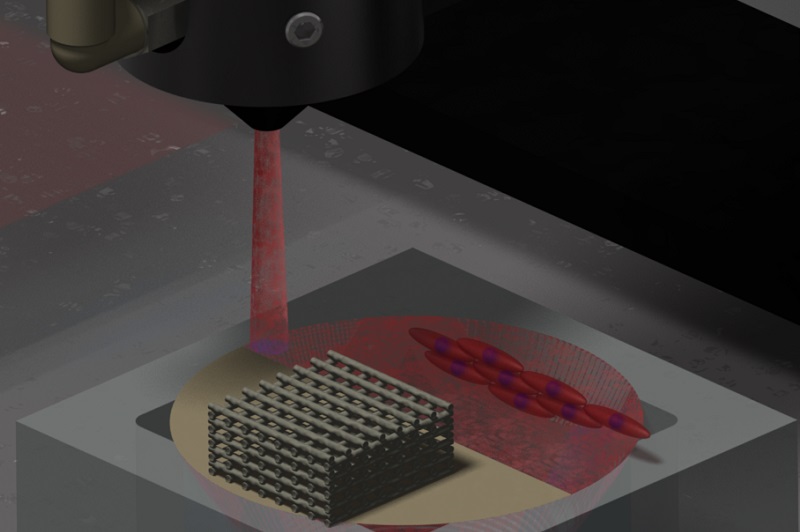
Bioprinting is a 3D printing technique used to build synthetic tissues or organs using live cells and some form of scaffolding material. Stem cells have been found to differentiate into different cell types based on chemical signals as well as mechanical and chemical properties of surrounding biological materials, tissue(s), organ(s), etc. Several different cell types, properties, and structures are often required even within a single given tissue type or organ.
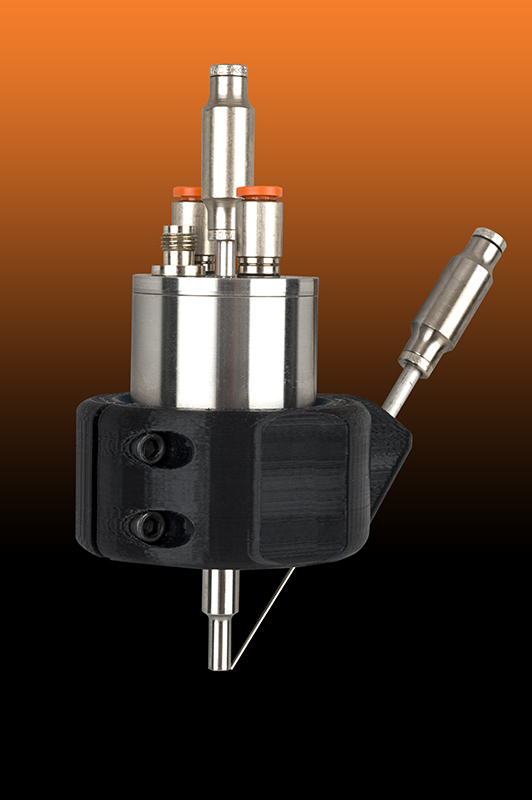
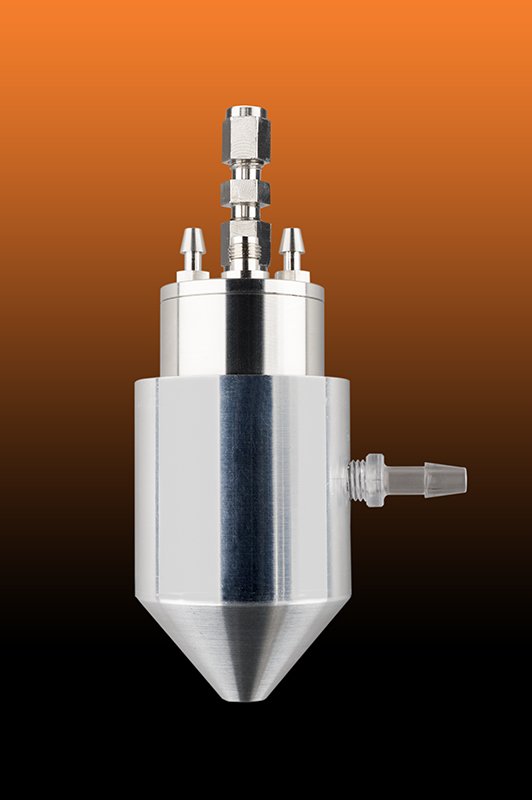
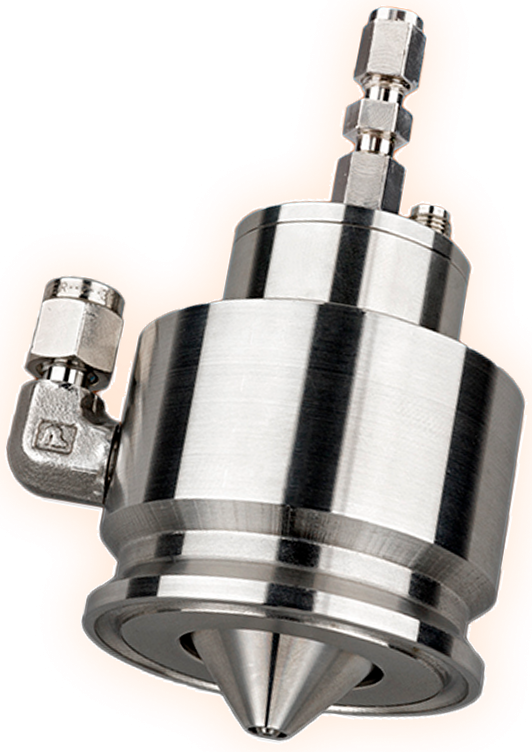
Sonaer nozzles allow one to gently and accurately spray solutions containing cells onto pre-existing substrates, or, utilizing multiple hypo-needle feeds or a DMF setup, and robotic coating system, one may be able to print both cells and scaffolding controllably during the same print, with the ability to run multiple solutions at different flow rates, print speeds, timing, etc. and potentially produce structures with multiple materials, complex shapes, and different cell types.