A variety of fuel cells utilize catalysts at both the anode (to oxidize fuel and convert it to protons/hydrogen cations and electrons) and the cathode (convert hydrogen cations and oxygen to water), often precious metal, nanocarbon, or other nanomaterial-based. Doped carbon nanotubes and core-shell metallic or composite nanoparticles are two examples of such. Such catalyst materials need first to be synthesized and then coated onto electrode and/or membrane surfaces for use in fuel cells. Solid oxide fuel cells (SOFCs) that do not utilize catalyst coatings are also of interest.
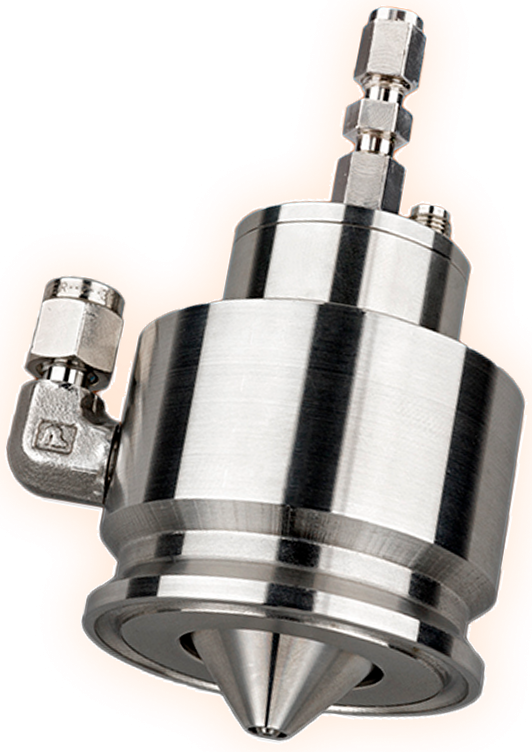
Sonaer high-temperature nozzles, nebulizers, and particle generators can be used for fuel cell catalyst nanomaterial synthesis via chemical vapor deposition and/or spray pyrolysis techniques. Moreover, Sonaer can custom manufacture AACVD and spray pyrolysis systems for fuel cell catalyst synthesis, based on customer goals and requirements, whether for the development or production of catalyst particles, for the research lab, start-up, or experienced production facility. Sonaer nozzles or probes may also be used for spray particle synthesis, sonochemical synthesis, or other wet-chemical synthesis techniques utilized to make catalyst materials and nanoparticles.
Sonaer nozzles can also be used to coat electrode or membrane substrates with catalyst materials. As a consequence of synthesis, or post-synthesis, depending on the technique used, catalyst particles are often suspended, forming “inks”, which then need to be coated onto appropriate electrodes or membranes for use in fuel cells. Sonaer’s ultrasonic atomizer nozzles and automated robotic coating systems can be used to accurately, precisely, and uniformly coat catalyst films and layers onto such substrates, minimizing overspray and hence minimizing waste, which is also important for device optimization, reproducibility, sustainability, and cost savings. Sonaer develops robotic coating systems from the benchtop/research level up, allowing for scalability of processes used to create novel, “cutting-edge” fuel cell catalysts as part of a clean, sustainable energy future. Furthermore, solution- or suspension-based spraying using Sonaer nozzles can potentially be utilized to print or coat solid oxide fuel cell materials, even if such spraying need occur over a heated substrate or in a heated environment such as an oven or furnace.
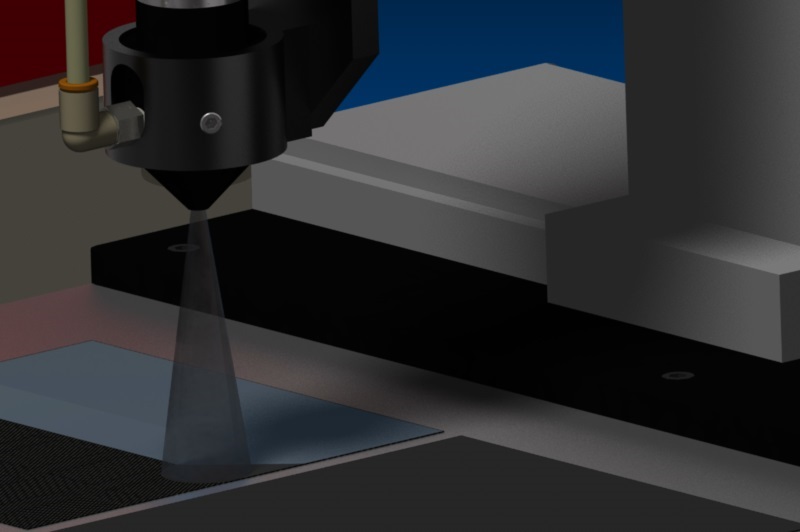
Ultrasonic spray deposition solution is delivered to the ultrasonic nozzle, creating a spray with uniform-diameter droplets. The spray is focused onto the substrate using nitrogen as the carrier gas. With the Sonaer dove tail spray shaper, droplets are atomized with the nozzle and the carrier gas is used to spreads the uniform droplets over a wider area. Controlling the flow of solution, carrier gas and exposure of droplets, uniform material thickness is easily deposited on the substrate.
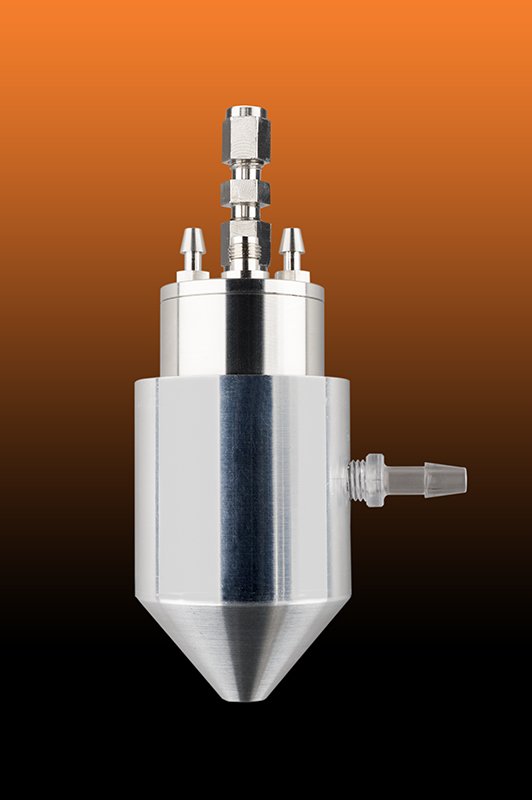
This product attaches directly around the atomizer nozzle and a small gas flow is used to focus droplets to a pin point. The nozzle works with liquid through the center orifice and the gas surrounds the droplets making them sharp.
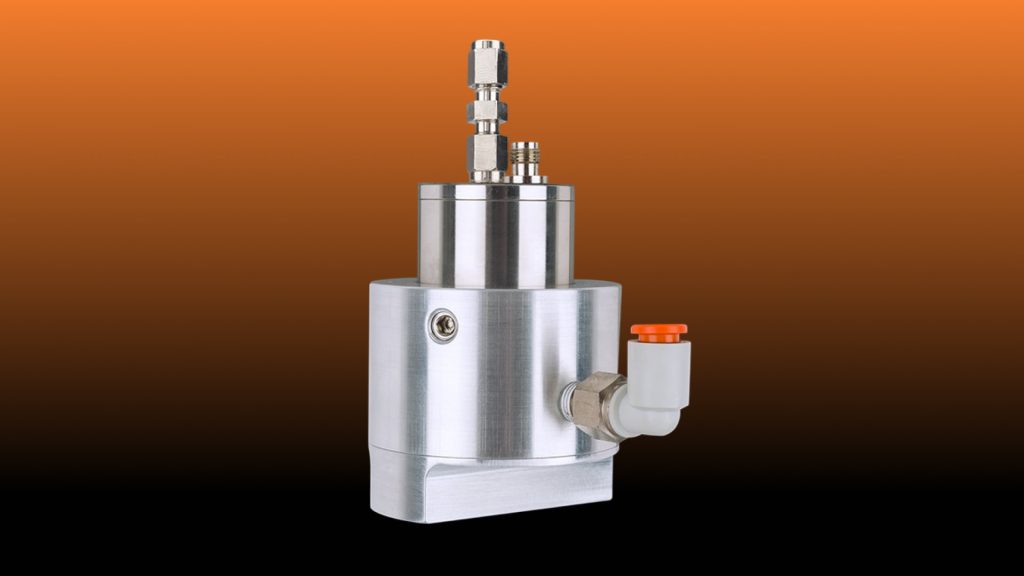
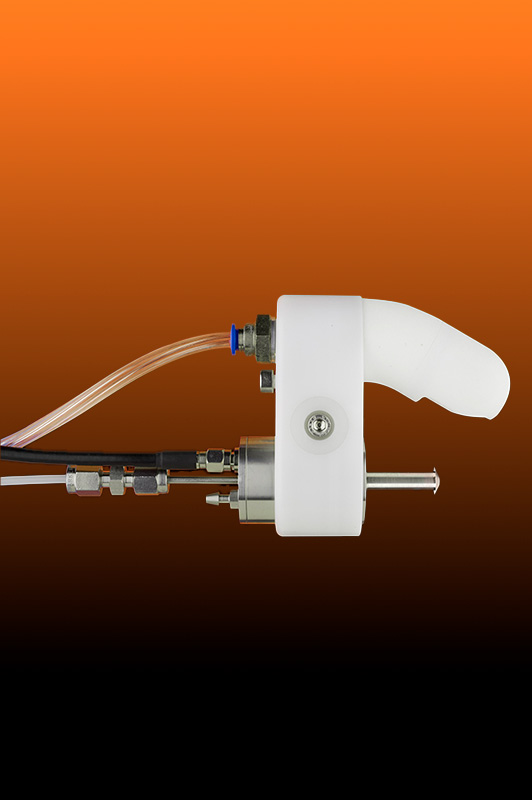
Sonaer flat spray attachment provides coverage in a rectangular area. The shaper spreads droplets in a consistent thin uniform direction with very little overspray. Thickness is nano to microns and is adjusted by the scientist for the application being developed.
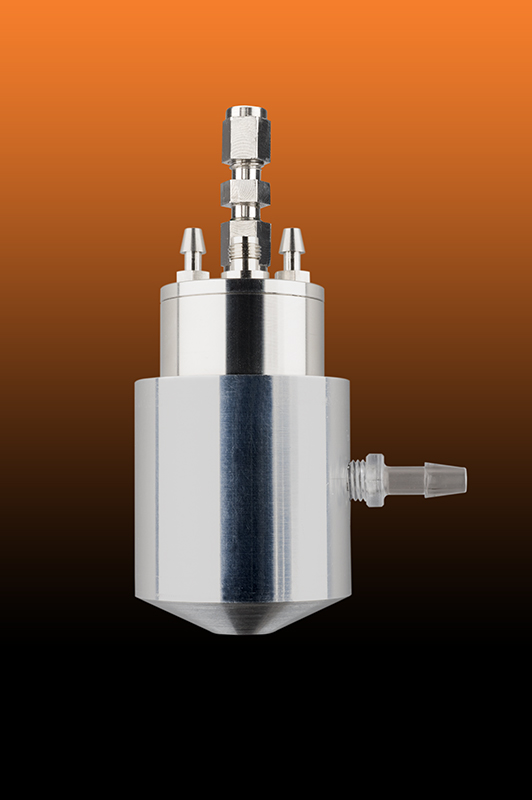
Sonaer wide vortex spray attachment uses a small gas pressure to coat large areas with low volume of droplets. Droplets are dispersed over a wide area and provide a thin uniform coverage.